Source references checked on 30 October 2026. The workflow is practical planning guidance; quantities, compatibility and handling arrangements require confirmation for the proposed production system.
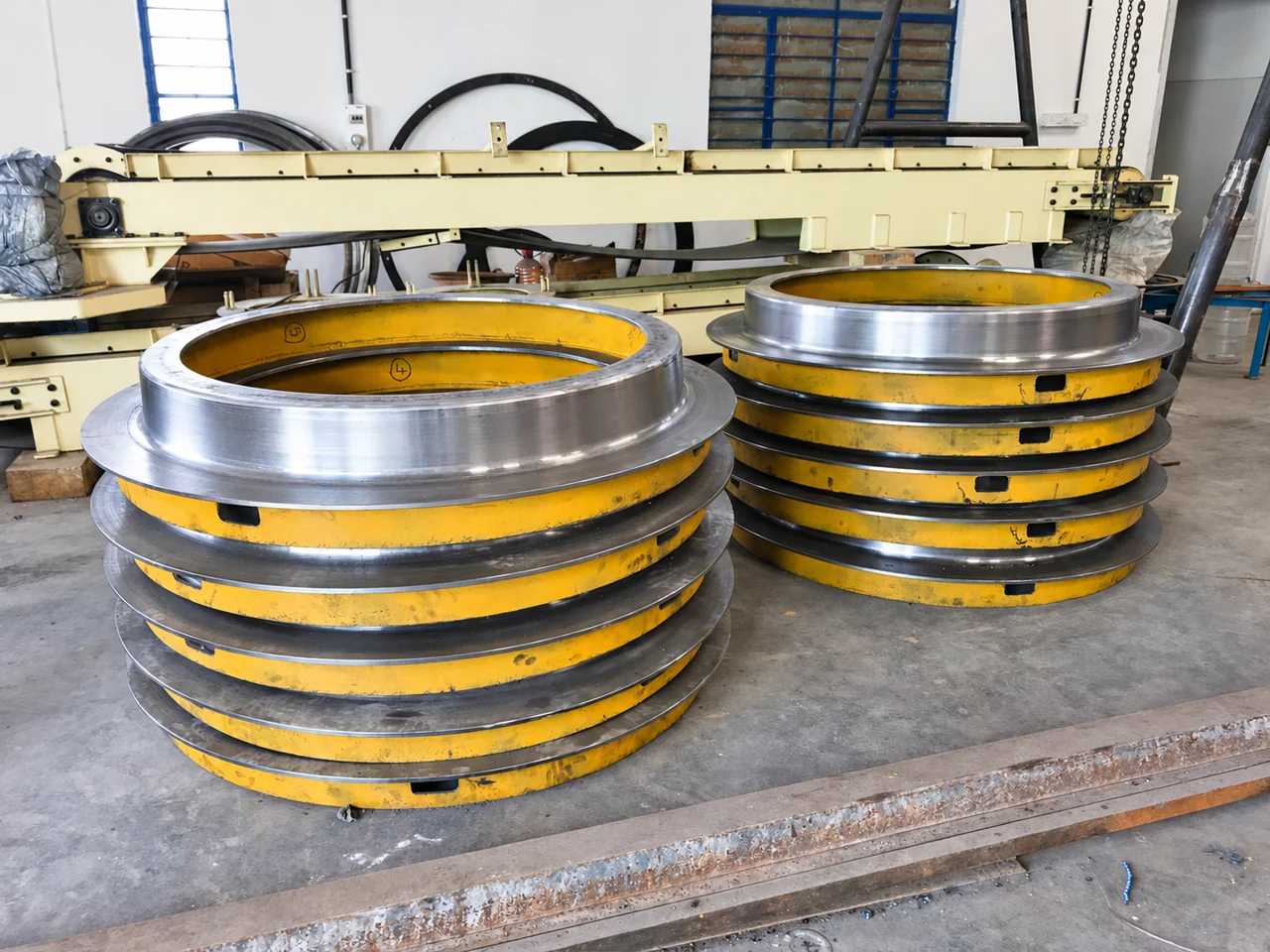
Create mould families from drawings, not diameter alone
List each finished pipe by internal diameter, length, wall arrangement, joint profile and drawing revision. Then ask the equipment supplier to identify the mould, core, pallet, header or other change parts required for that product. Record the applicable machine interface and any existing components you intend to retain.
Two pipes with the same nominal diameter may require different joint-forming components. Conversely, some components may be reusable across a defined family if their compatibility is confirmed. Mark each proposed shared component “verified” or “to be checked”; do not allow a convenient spreadsheet grouping to become an untested production assumption.
Separate mould reuse from pallet return
The ACPA quality-control training manual explains that dry-cast production can permit early form removal and repeated form use. That does not establish when your particular product can release its supporting pallet or be handled. Those decisions depend on the approved process and product requirements.
Map the actual route of each mould family: preparation, casting, demoulding, any period retained with the product, removal, cleaning, inspection and return. Use observations from a representative trial where possible. If a step is not yet measured, label it as an assumption and show who will confirm it. Never use an illustrative animation as the timing basis.
Count what is unavailable when the next casting begins
For each planned casting, ask whether a compatible, inspected pallet will be ready at the station. At that moment other pallets may be in preparation, supporting products, awaiting return, being cleaned or unavailable for repair. A simple time-based schedule shows where shortages arise without assuming that every pallet bought is usable every day.
Compare a stable run of one size with a mixed-size shift and a delayed-return scenario. Any reserve should have a stated purpose, such as covering an inspection hold or a known repair turnaround. Confirm the final quantity through the planned process and production trials; there is no universal pallet ratio that fits every pipe plant.
Plan the changeover as a job with its own resources
Ask the supplier to walk through a change from one specified pipe to the next. Identify the components removed, the lifting and storage arrangements, the setup checks and the people involved. Keep the proposed handling method subject to review by the responsible site and equipment professionals.
Build the weekly sequence around delivery commitments as well as changeover effort. Grouping similar products may help, but producing stock too early also occupies space and ties up resources. Record the trade-off explicitly. A sensible sequence should remain workable when a customer advances a delivery or a product is held for inspection.
Identify each mould and check it before reuse
The NPCA quality-control manual addresses dimensional checks for forming equipment, including pallets and headers, before first use and following repairs. It also discusses cleaning and equipment identification. Use the relevant product requirements and supplier instructions to establish the checks for your own moulds.
Create a register with an individual ID, compatible drawing revisions, location and condition. Keep held or damaged components distinguishable from ready stock. Record repairs and the person responsible for approving reuse. When a finished joint problem appears, that traceability helps the team identify which mould was involved instead of treating the entire inventory as interchangeable.
Ask for a detailed mould proposal
Send Param Machines & Moulds the product matrix, existing-machine details, representative schedule and the proposed mould-return sequence. Ask the quotation to separate mould assemblies, cores, pallets, change parts and spares, and to identify compatibility checks still required. Agree the drawings and inspection evidence before manufacture. This turns a request for “extra pallets” into a proposal your production, quality and purchasing teams can assess together.
Continue your project
Common questions
How many pallets should I buy for a concrete pipe machine?
Work from the planned casting sequence and the time compatible pallets remain unavailable through product support, return, cleaning and inspection. Confirm the resulting inventory with process evidence and a defined reserve; do not use a universal ratio.
Can I reuse pallets from an existing pipe line?
Only after confirming the joint drawing, support and locating interfaces, condition and compatibility with the proposed process. Provide the supplier with controlled dimensions and inspection information, supported by photos.
Should mould and pallet quantities always match?
No fixed equality should be assumed. The outer mould and the supporting pallet may follow different return sequences. Establish their individual availability through the intended process and approved handling requirements.
Further reading
- ACPA: Concrete Products Quality Control Training Manual, dry-cast process background ↗
- NPCA: Quality Control Manual, 19th edition, forming equipment and production controls ↗
- Param: product families ↗
This guide supports an initial equipment discussion. Confirm product requirements, equipment scope and site-specific obligations with your project team.
Turn your plan into an enquiry.
Share your drawings, product range and project location. We can discuss the equipment you are considering.
Prepare your project enquirySouth Africa project checklist
Plan around your actual product mix and existing plant. South African precast terminology includes manholes, stormwater pipes, catchpits and rectangular portal culverts. A portal culvert is a particular configuration, not a synonym for every closed box culvert. Share metric drawings and the specified product requirements.
Explore local buying guidance ↗