
Create a product brief that travels clearly
Send the intended finished-product drawings, size range, joint details and production mix. Identify the project specification and who is responsible for approving the finished product. State units explicitly, particularly when different teams work in metric and imperial measurements. Keep one controlled drawing revision for all suppliers.
Explain local terminology where it may differ. For example, a buyer may use “reinforced concrete pipe” or “RCP” while an Indian supplier uses “RCC pipe.” The drawing and specification should establish the product, rather than relying on the abbreviation. Include any required documents or acceptance evidence as questions to resolve in the proposal.
Describe the actual destination site
Give the factory address or project location and the proposed delivery point. Share the available electrical supply, relevant utility details, site access and expected operating conditions. Ask the supplier to identify the inputs needed to assess a suitable configuration. Have your local technical team review the resulting installation requirements.
USA and Australia projects need their own project brief, just as individual African and Middle Eastern countries do. Ask the responsible local professionals to identify applicable machinery, electrical, workplace and finished-product requirements. Confirm how these will be addressed and documented before ordering; a generic statement of international compatibility is not an acceptance plan.
Make the commercial scope comparable
Request an itemised proposal separating equipment, moulds, controls, accessories, spare parts and services. Record optional items and buyer-supplied dependencies. Compare quotations against this common list, not only the total price.
Ask for the named delivery point, quotation currency, validity and the proposed allocation of packing, transport, insurance, unloading and installation responsibilities. Have the commercial teams resolve payment arrangements and contract terms. Confirm the agreed scope in writing, including the process for approving drawing changes or additional work.
- Exact equipment and moulds included in the order.
- Documents and inspection records to be supplied.
- Delivery point and responsibility for each transport stage.
- Installation, commissioning, training and support scope.
Request shipping information before finalising logistics
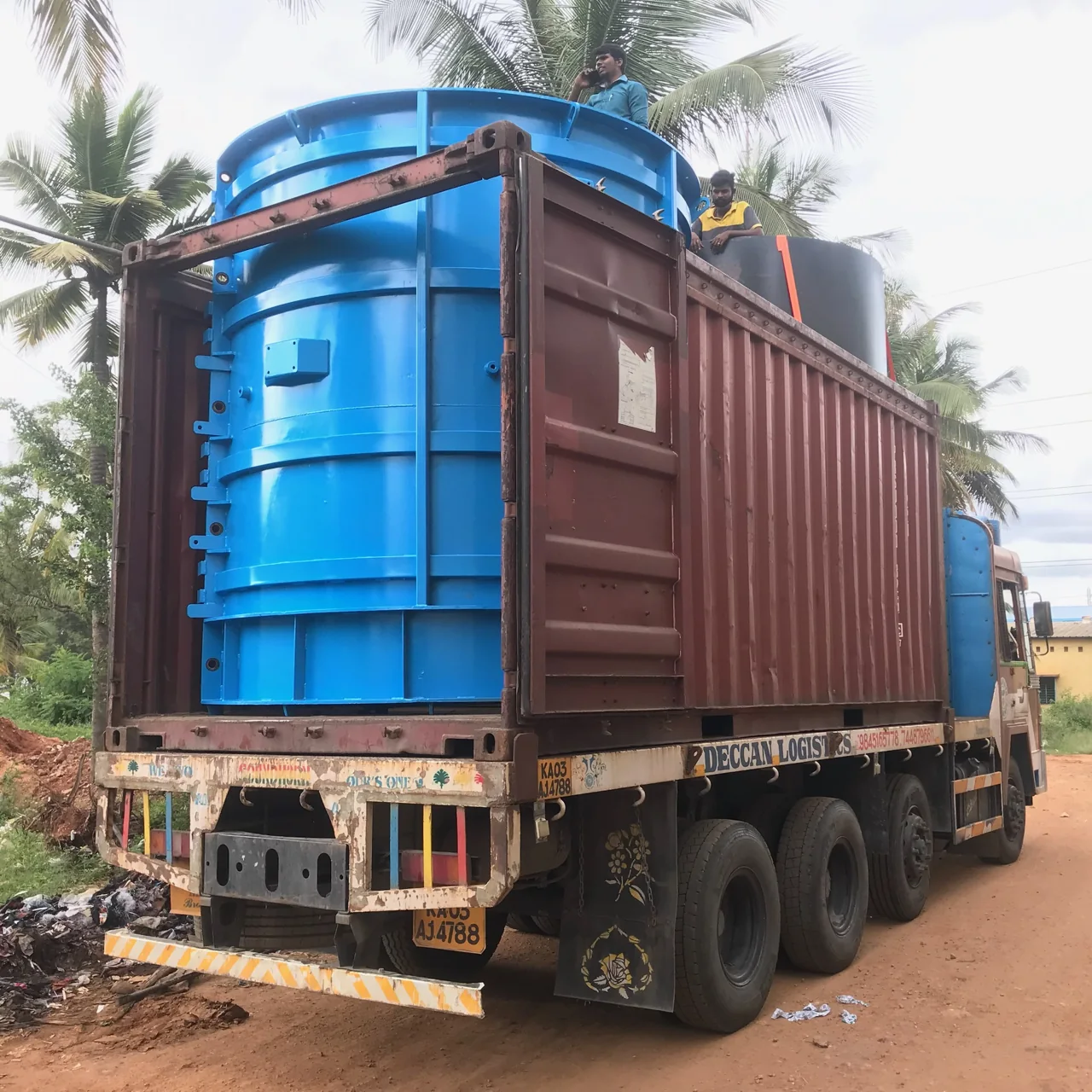
Ask for preliminary package dimensions and weights when they are available, then agree when the final packing information will be issued. Your freight forwarder and receiving team can use this to assess routing, unloading and site access. Discuss how loose components will be identified and how the shipment inventory will be checked on arrival.
Confirm the shipment-specific document list with the importer, customs adviser and freight forwarder. Commercial invoices, packing information and transport documents are common topics for that discussion, but the required documents depend on the transaction and destination. The U.S. International Trade Administration provides useful general explanations; its U.S. export procedures should not be treated as rules for exports from India.
Agree inspection and commissioning milestones
Decide what you need to review before dispatch: drawings, an inspection, a demonstration or other agreed evidence. Define the representative product and acceptance criteria rather than relying on an unstructured video. Record who attends, what is measured and how open items are resolved.
For commissioning at the destination, identify the site-readiness checks and the buyer’s responsibilities. Confirm what the supplier’s attendance covers, if offered, and which resources must be ready on site. Agree the training participants, working language, manuals and handover records. Keep any travel arrangements and scheduling dependencies explicit in the project scope.
Make ongoing support part of the enquiry
Ask how to identify and order replacement parts, which components may need planned stock and what information is required for troubleshooting. Discuss support channels, working hours, response arrangements and any costs. Do not infer a local service office or guaranteed response time from the fact that a supplier accepts international enquiries.
To start a conversation with Param Machines & Moulds in Bengaluru, India, send the project country, product drawings, target output mix, site information and requested supply scope. Ask the team to confirm feasibility, service arrangements and documentation for the specific project. This gives both sides a practical basis for developing a proposal.
Continue your project
Common questions
What should an overseas buyer include in the first enquiry?
Include the exact destination, finished-product drawings, project specification, intended production mix, utility details and requested equipment and service scope. Identify the technical and commercial contacts who can resolve questions.
Does a quotation establish compliance in my country?
Confirm the applicable requirements with your local technical and professional advisers, then agree the evidence and responsibilities with the supplier. A quotation should state what is included; it should not replace the destination-specific review.
How can I compare delivery and installation offers?
Use the same named delivery point and scope schedule for every offer. Ask who handles packing, freight, unloading, site works, commissioning and training, and record any exclusions or prerequisites.
Further reading
- U.S. International Trade Administration: general export-document terminology ↗
- Contact Param Machines & Moulds in India ↗
This guide supports an initial equipment discussion. Confirm product requirements, equipment scope and site-specific obligations with your project team.
Turn your plan into an enquiry.
Share your drawings, product range and project location. We can discuss the equipment you are considering.
Prepare your project enquiryAustralia project checklist
Start with the asset owner’s drawings and the relevant Australian or AS/NZS product specification. Sewer maintenance holes, stormwater pits and box culverts serve different functions; define each component before planning the mould. Use millimetres for products and metres for the factory layout.
Explore local buying guidance ↗